My husband and I recently spent a few days in New York City, visiting our son. In addition to visiting the Metropolitan Museum of Art and the Whitney Museum of American Art (both of which I heartily recommend), we took a tour of the Stephen A. Schwarzman Building of the New York Public Library. What a wonderful experience! And free!
The tour was given by a vivacious, enthusiastic and knowledgeable  volunteer, who brought amazing history to life throughout the library. The building was constructed on the foundation of a reservoir, with the cornerstone laid in 1902.
 Before you even enter the building, you are greeted by two iconic statues. The majestic lions, nicknamed Patience and Virtue, are made of a rose-colored marble. Once inside the front lobby, the gorgeous huge front windows are worth turning around to view.
The first room we visited was the Dewitt Wallace Periodical Room. According to the tour guide, DeWitt and Lila Bell Wallace spent many hours reading and cultivating articles from the Library’s collection before founding the Reader’s Digest Magazine in 1922. The Wallaces  gave generously after becoming wealthy and The Wallace Foundation funded the restoration in 1983 of The Periodical Room that served as their informal editorial office. The ornate ceiling looks like wood but is actually plaster. The beautiful murals are described in detail on the library website.
Another highlight of the tour was the Gutenberg Bible on display upstairs. Johannes Gutenberg was the first European to us e movable metal type in the production of books, a much faster system than handwriting or woodblock print. The New York Public Library’s copy of the Gutenberg Bible, one of only about 180 produced, was donated by James Lenox, who was one of the co-founders of the library.
Surrounding the Gutenberg Bible is a set of four arched murals called The Story of the Recorded Word. These murals, created between 1938 to 1942, were part of a Works Progress Administration (WPA) project. The first mural shows Moses with the Ten Commandments, as depicted in Exodus of the Old Testament; in the second a monk from the Middle Ages copies a manuscript; the third mural shows Gutenberg with a proof of his Bible; and the fourth depicts Ottmar Mergenthaler at a linotype machine.
This is only a small portion of the artwork and information shown us during the tour. I would encourage you to visit yourself if you are able. For more information about the New York Public Library, visit their website at https://nyclib.com/.

 As we approached the cathedral, I was taken by the garden and Peace Fountain at the side. The Peace Fountain, a magnificent work itself, is surrounded by sculptures created by students at the school. I was astonished by the skill and effort put into these creations and spent quite a while looking at them.
 My husband strolled down the lane at the side of the cathedral and came back to report seeing two peacocks wandering about. These peacocks, one of which was white, were friendly and fearless. They seemed quite used to being around people and, at least while we were there, seemed to enjoy showing off. According to an article in the


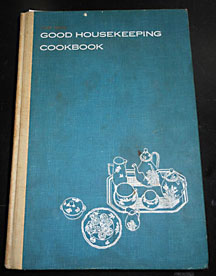 her favorite which he says she used every day, he found an old Antioch bookplate which we are still printing as
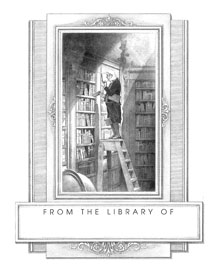 One of our most popular designs, this adaptation of German Romanticist painter/poet Carl Spitzweg’s famous satirical painting “The Bookworm” was originally published by the Etchcraft Company. It was introduced by the Antioch Bookplate Company in the 1950s. When I moved to Yellow Springs, Ohio, and started working with bookplates in 1990, I was amazed to see this design and realize I had come full circle.